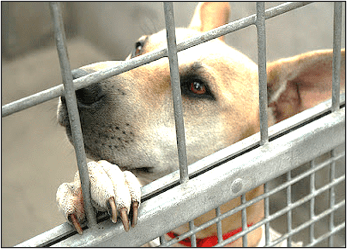
“The number of animal adoption dropdown,” said Allyson Bootes, director of development of the H.A.L.O No-Kill Animal Rescue, Wednesday afternoon. She expressed her worry about the impact of the extreme inflation on pets within a shelter in Sebastian, Fl.
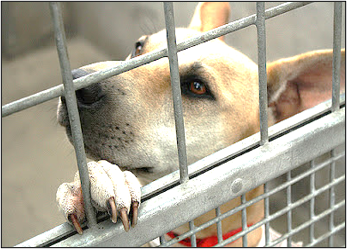
About 4.5 million animals enter shelters every year. Approximately one million animals are killed, according to the statistics released by NOKILL Advocacy Center. “While shelter leadership drives the No Kill initiative, it is the community that extends the safety net of care,” outlines the Advocacy Center. Inflation impacts families, including shelter operations. Allyson Bootes explained that the “adoption rate is coming down” while the “surrender rate has gone up” because of the “extreme inflation and substantial housing crisis.”
The Consumer Price Index for All Urban Consumers (CPI-U) for Tampa-St. Petersburg-Clearwater rose 1.1% from January to March, according to a recent news release from the U.S. Bureau of Labor Statistics. The same report also shows the index of all items less food and energy increased by 1.6% over the bi-monthly period. The food index increased 0.9% from January to March, while in contrast, the energy index declined 4.9%.
As the living cost impacts families’ budgets, “People are forced to downsize,” and “they can’t afford their rental homes anymore,” said Bootes.
H.A.L.O No-kill Animal Rescue is a no-kill animal shelter that “received 1319 animals, among them 1195 adopted for the year 2022. Within the shelters of H.A.L.O, 80 dogs, around 40 cats, and other animals, less those placed in 140 foster families, wait for a permanent home,” according to the shelter information released.
“The foster family program is a huge help. It helps H.A.L.O saves more lives” because “We are very limited on space,” stated Bootes, who insists that H.A.L.O “will never euthanize.” However, inflation forces people to give up their animals” while the adoption rate drops down, according to Bootes.
“We are pretty blessed” We have the support that helps the H.A.L.O’s mission no-kill feature.” A lot of volunteers help walk our dogs and socialize our cats.
Regarding the arrival to the adoption of the pets at H.A.L.O, Boots explained, “It depends on how they come to the shelter; we quarantine them for two weeks. During this time, H.A.L.O supplies any necessary medical care the animals need, including vaccination. Also, this time frame helps to ensure they do not already belong to somebody and have been lost.”
“A NoKill shelter can be a private shelter or an open-admission animal control facility. An animal shelter achieves No Kill when it has ended the killing of all non-irremediably suffering animals,” explained the NoKill Advocacy Center.
Also, Bootes said, “Many animal shelters euthanize because of extra costs for training and providing extensive medical care.” For all that, since 2006, H.A.L.O No-kill Animal Shelter works for animal welfare in the Tampa area with other partners in this field. From day one, 20 thousand animals were saved according to the organization’s evaluation.
In perspective to improve animal welfare, Senator Book introduced the SB 932 Bill about animal protection in the state of Florida on March 07, 20223.
 DC of Tampa