
By Bob Simon
Washington: The Supreme Court heard April 25, 2022, an oral argument opposing Joseph Kennedy v. Bremerton High School District. The coach was placed on paid leave after sincere efforts to accommodate personal prayers, according to Richard B. Katskee, the attorney of the high school. But Paul D. Clement, who represented Kennedy, took legal action for the violation of his client’s Free Speech right.
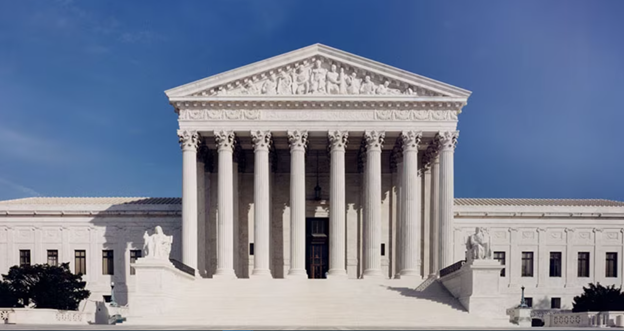
Declined in 2019, the U.S. Supreme Court finally decided to hear the appeal of the High School football teacher. The Bremerton School District of Washington hired in 2008 Kennedy as an assistant coach and years later fired him for briefly praying after each game in the center of the field.
During the hearing, both parties compared this case to Garcetti’s rule and Pickering’s case. Respectively, the previous one is about the U.S. Supreme Court rule, which states that public employees do not have a First Amendment protection for speech issued as part of their official duties. The second case was about the dismissal of a high school teacher who had written a scathing letter to a local newspaper reflecting on the school system’s administration according to the Pickering Balancing Test for Government Employee Speech. After several verbal warnings, the school put coach Kennedy under discipline for inappropriate misconduct, according to Katskee. The Bremerton School District told Kennedy, “You cannot engage in demonstrative religious conduct while you are on duty for the District.”
Despite those warnings from Bremerton School officials, Kennedy’s lawyers sent a letter to them expressing Kennedy’s desire to continue his practice of saying audibly prayer just after the game at the 50-yard line, and students could come.

Clement explains, “pursuing a hybrid-type case in which the free speech and exercise clauses reinforce each other.” The plaintiff’s attorney says to have a prayer in the center of the field when the public is watching is not considered as government speech. But the Bremerton School official replies that Kennedy goes beyond private speech.
“You are free to engage in religious activity, including prayer, but it has to be physically separate from student activity, and it has to be non-demonstrative,” explained in a letter its officials addressed to coach Kennedy.
However, Katskee explains, “No one doubts public school employees can have quiet prayers by themselves at work even if students can see.” But “Kennedy insisted and even announced in the press that those prayers are how he helps these kids be better people,” Katskee said.
For Katskee, the Garcetti rule can apply to this case because Kennedy, as a coach, is a public-school employee. He said one day, “the coach expressly permitted legislators and others to join him after the district closed the field to the public.”
Justice Stephen Breyer says, “In this case, both parties seem to express a different point of view but not really much about law.”
 DC of Tampa