By Bob Simon
Florida – A father and son usually came to Simons Park on the University of South Florida campus. Their favorite pastime is spending time at the park – feeding the black ducks, which often count on visitors’ food.
“Sometimes, I planned to stay one hour with my kid, [but] I stayed only 10 minutes,” said Ray. He is a resident who lives nearby and chose this place for his usual family hang-out.
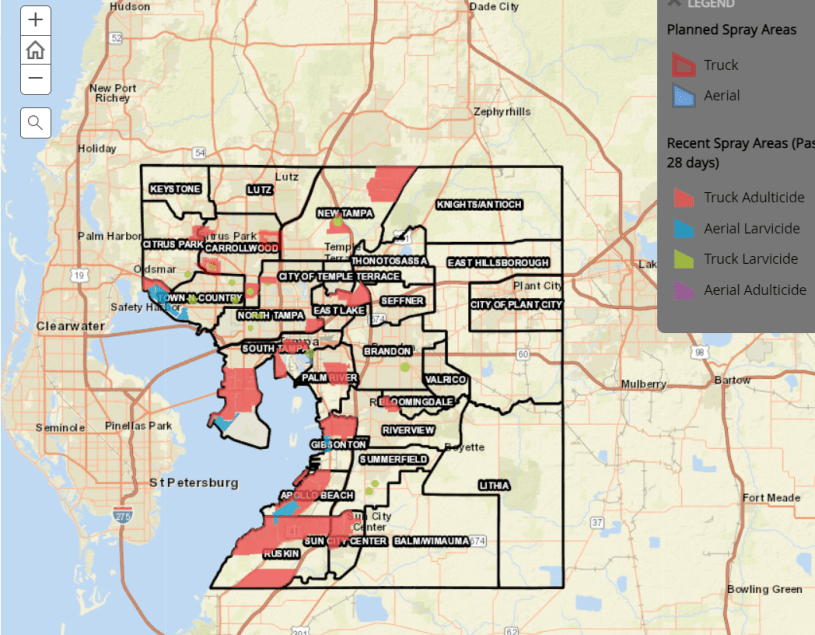
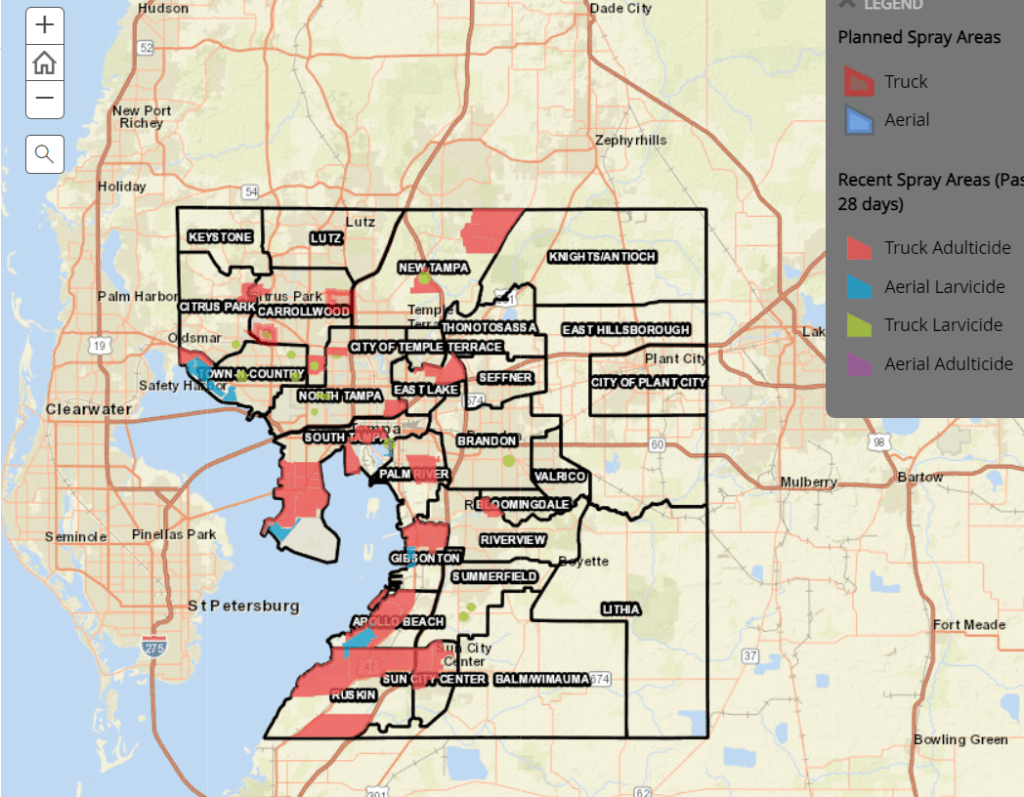
However, this place is one of the well-monitored areas in Hillsborough County. It’s regularly sprayed via truck larvicide, according to the spray areas map established by the county.
Similar to Ray, Florida residents, as well as visitors sometimes face the same situation.
Dr. Philp Koehler, a medical entomologist, outlined why the Florida environment attracts mosquitoes during an interview last week.
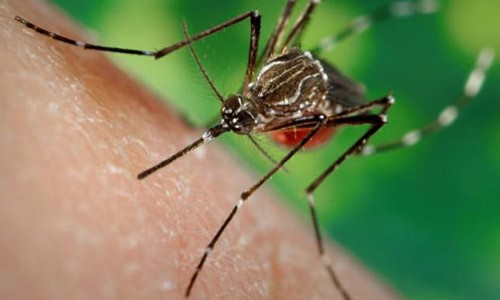
He explained that the bloodsucker is looking for a meal every time it bites someone.
Nevertheless, it also needs heat because this cold-blooded creature cannot produce even a single ounce.
So, the human body, via the heat and “the carbon dioxide that people breathe out attracts mosquitoes.”
Last year, Hillsborough County officials, through the mosquito management program, conducted more than 20 thousand larvae inspections.
They responded to more than three thousand customer requests related to mosquito issues.
Also, they provided around 17 thousand mosquito fish to Hillsborough County residents, according to their website.
If the Sunshine State is famous for its good temperature across the United States, undoubtedly the mosquitoes have received the information too.
Currently, in Florida, experts have already identified 90 species of mosquito.
From these categories, “80 species can transmit viruses such as Zika, Dengue, and Chikungunya. Parasites like malaria are also transmissible via these mosquito bites,” Koehler said.
“Yellow Fever, Asian tiger, Black salt marsh, Southern house, and the Gallinipper are the top 5 most dangerous.”
In fact, temperature and water are the two significant factors that attract parasites, especially mosquitoes.
“Mosquitoes in their larvae stage need standing water in order to develop,” Koehler explained.
Therefore, Florida, the southernmost U.S. state and the country’s fifth rainiest is a perfect area for mosquitoes.
Again, the thousand miles of coastline of Florida may benefit mosquito breeding.
These zones mainly “where brackish water meets with fresh water constitute an ideal breeding area for mosquitoes,” said Professor Koehler.
He later said, “The itching after the mosquito’s bite is an allergic reaction to a chemical compound. “Mosquitoes inject saliva as anticoagulant in order to prevent the blood from coagulating in their mouthparts and blocking them.
Depending on the compound, the scientist said, “You may not feel if a mosquito bites you.”
From a general wildlife approach, Florida environments are suitable for mosquitoes.
Therefore, residents “must protect themselves against mosquito bites which allow them to spread diseases,” Koehler suggested.
“Contact your mosquito control district and pest control companies who can help the mosquito population.”
Although, in Florida, they can apply insecticide to vegetation to prevent mosquitoes from laying their eggs.”
While encouraging the use of repellent, Dr. Koehler explained that a teaspoon of water is enough to breed some species.
“Some of the problems we had with mosquitos have increased over the years.” Then, “Stay safe from mosquitoes and try to protect yourself from mosquito bites when you are outside, Koehler concluded.
Hillsborough County residents are allowed to sign up here to request mosquito spray notifications.
 DC of Tampa