By Bob Simon
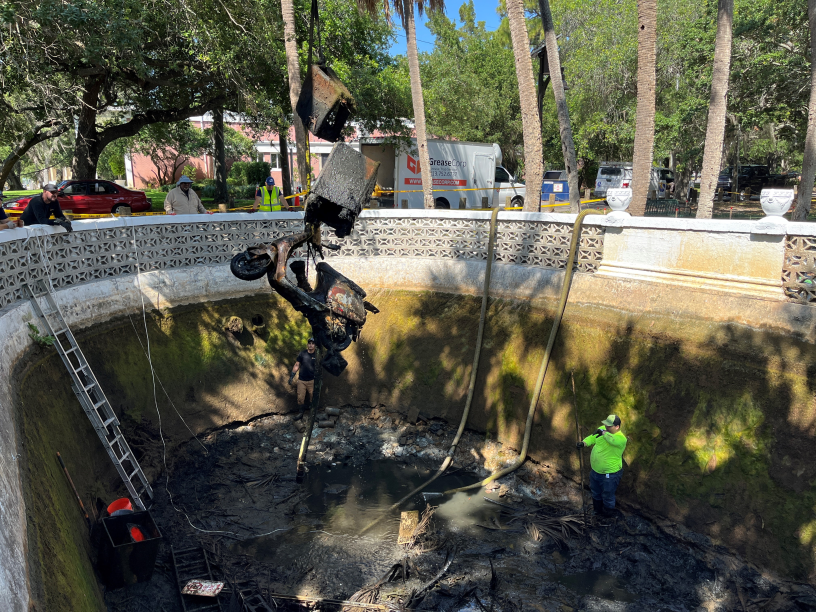
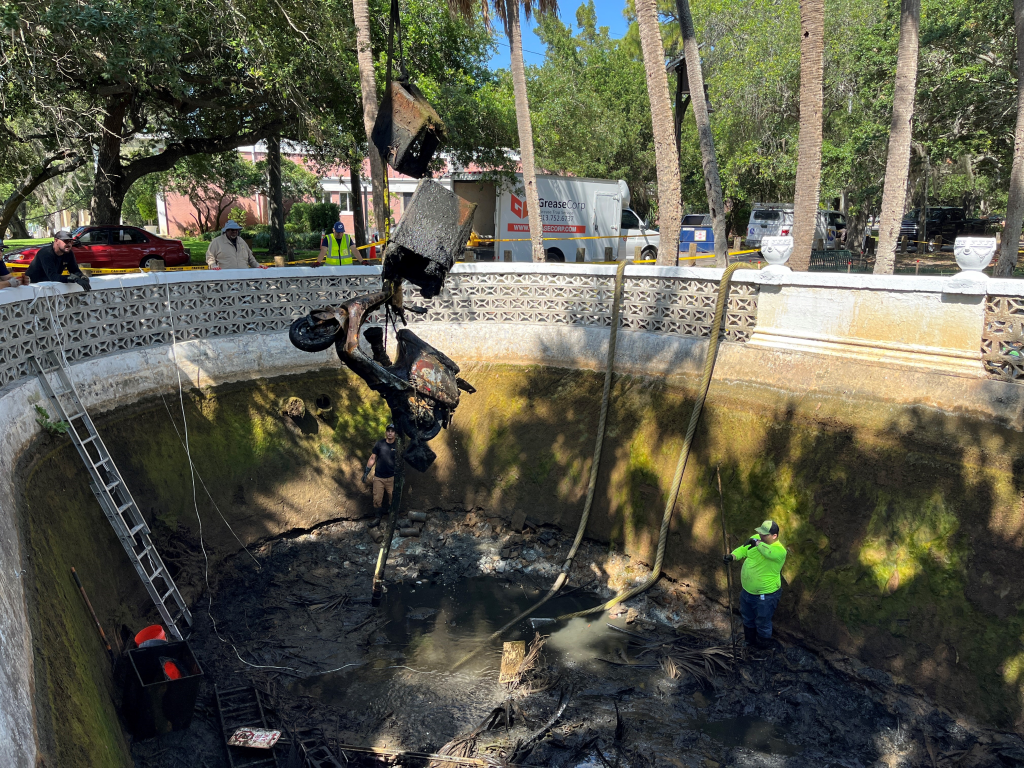
The scenic beauty of the Tampa Bay region echoes the importance of its ecological features. In Fred Ball Park, a small park off Bayshore Boulevard, the environmental and historical importance of the site is highlighted by the existence of the Palma Ceia Spring, a century-old spring. This spring, in the past, naturally harmonized the relationships among all living organisms inherent to this region.
Environmental experts describe relationships between living organisms and their environment as essential to a region’s ecosystem. Consequently, restoration is crucial to protect ecological features.
Palma Ceia Spring needs to be restored for its historical significance and ecological importance, explained Thomas Ries, CEO of Ecosphere Restoration Institution.
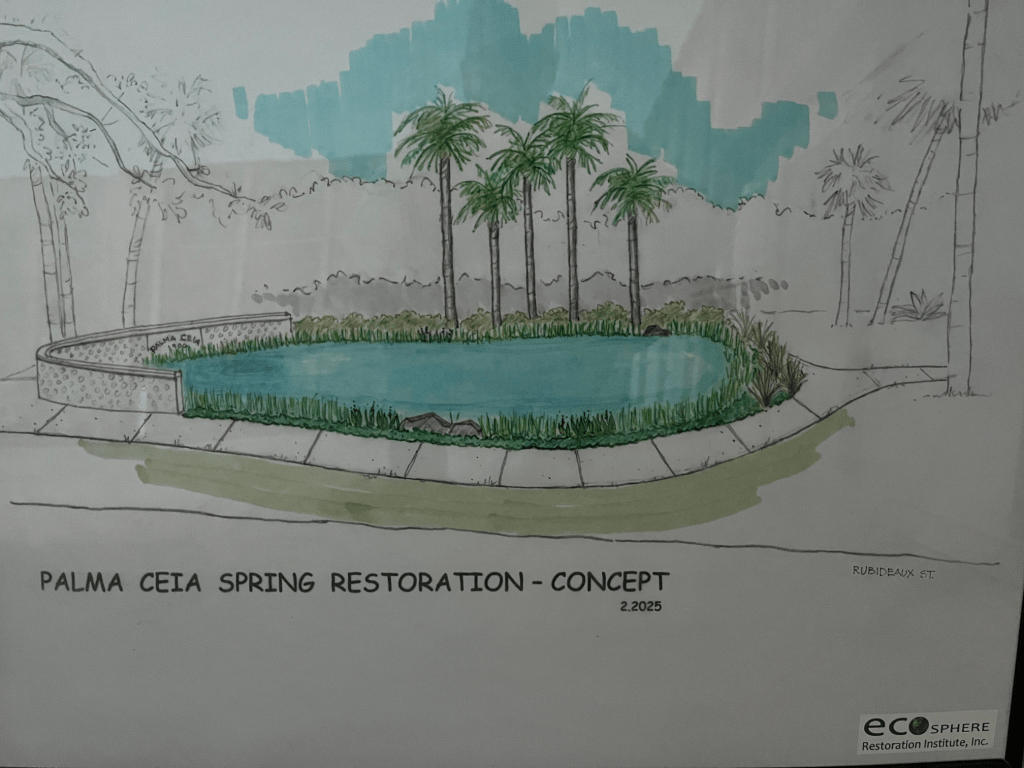
Ecosphere Restoration Institute and the City of Tampa wants to bring the area back to its original condition. According to Ries, the plan is to restore the spring and develop a larger pool to create a wetland. The wetland is to help revive some ecological features at Fred Ball Park.
This is a goal the local nonprofit organizations and the City of Tampa have been working towards for the past several months.
Fred Ball Park, as well as the spring-fed basin, remains a vital spot in the history of the City of Tampa. In this area, residents used to meet the Tampa Bay scenery in its natural state.
However, a wetland as a feature can change the décor – an agreement many locals share. With a natural spring in the park, the quality of water can improve, explained Ries, who also announced, “The restoration is currently halfway through its design and permitting phase.”
Records reveal the Park has undergone numerous restorations to preserve its historical and environmental significance for future generations.
“This renovation aims to restore the ecological features existing in this area 500 years ago,” Ries says.
“At that time, the area served as a natural habitat for fish, birds, and other native Tampa Bay area animals.”
Ries is currently in the process of obtaining permits to initiate the removal of the concrete basin and conduct surveys of the area. At least four permits are necessary, said Ries, who underlines this phase as the most important one. The next chapter in the restoration consists of “a lot of extensive ground penetrating radar survey to map the subsurface of the area,” Ries adds.
The budget for the entire restoration is unknown, as phase one is currently incomplete, according to Ries.
However, “funds for the surveys and permits process are available, as grants from the Hillsborough County Environmental Protection Commission and the Rose Club have already reached $85,000,” Ries says.
This amount is insufficient for the entire restoration project. “For now,” said Ries, “that’s more than we need to get the restoration fully designed.”
“Additional grants are necessary to work on the realization of the wetland as soon as the surveying phase is completed,” Ries adds.
The restoration of the Palma Ceia Spring-fed basin depends largely on how quickly the grants arrive. “The faster the grant comes, the sooner the new Palma Ceia Spring will be developed. The time frame to complete the entire project could probably fall within 4 to 5 weeks,” Ries says.
According to Hillsborough County records, in the early 1900s, Thomas Palmer, a former state attorney for the Sixth Judicial District, owned the property. Palmer buys the land and turns it into an attractive area in 1907.
Other publications show Palma Ceia Spring fed basin became a popular recreation spot for locals living in downtown Tampa in 1928. This led to the first remodel of the park and the pool. Another renovation took place in 1930, and unfortunately, the park closed the following year.
Before this period, explained Ries, it was very common for Native Americans to gather near this Spring. “The spring provided these residents fresh water while the Hillsborough Bay was their kitchen,” Ries says.
Ries describes Palma Ceia Spring as an essential environmental feature for the downtown Tampa area. “This can serve as a natural habitat for animals living in the area,” Ries adds.
Ries also describes a new Palma Ceia Spring functioning as a kidney – a filter to remove debris and chemical substances from the water.
“As nice as a spring water is, a spring has an elevated amount of nitrates, which is bad for [living organisms in the] Hillsborough Bay,” Ries says.
A restored Palma Ceia Spring, which flows through a spring pool featuring native plants, is the inspiration behind this renovation project, explained Ries, who emphasized the importance of wetlands in absorbing nutrients from springs.
“In order to clean up the water poured into Hillsborough Bay, the restoration of this spring-fed pool is worth the effort,” Ries says.
Palma Ceia Spring basin restoration implies removing the concrete basin, according to Ries.
“The goal is to create a small wetland. A new wetland of half an acre in size – twice larger than the current basin size,” Ries says.
Getting rid of the basin is the first task on Ries’s to-do list. This Basin’s size is approximately 30 feet oblong.
For the water flowing from the wetland, Ries plans to route an exit for this water from under Bayshore Blvd into Hillsborough Bay.
Besides its environmental importance, the Palma Ceia basin was historically regarded as having healing power, according to local beliefs.
Either for traditional beliefs or recreational enjoyment, many residents used to swim or bathe in the large pool, according to Hillsborough County publications.
Palma Ceia Spring basin history continues with Hillsborough County’s acquisition of the property for $15000 in 1947.
The county changed the initial name, Palma Ceia Park, to Fred Ball Park in memory of the then-chairman, Ball—a former Hillsborough County commissioner who had pleaded for the initial restoration of the park.
Four decades after the acquisition, the Rose Garden Circle and the City of Tampa Parks Department jointly rehabilitated the entire park for $40 thousand.
The ongoing restoration of Palma Ceia Spring is very promising, both in its natural aspects and beyond. The next chapter of the restoration initiative is soon to come.
Visit the Ecosphere website to learn more about this project’s restoration.

